TMS,
explained.
Understand Transcranial Magnetic Stimulation in about ten minutes. Evidence-based. Easy to follow. Made for patients and families.
The essentials at a glance
*Appointment times are often longer than the stimulation itself.
What is TMS?
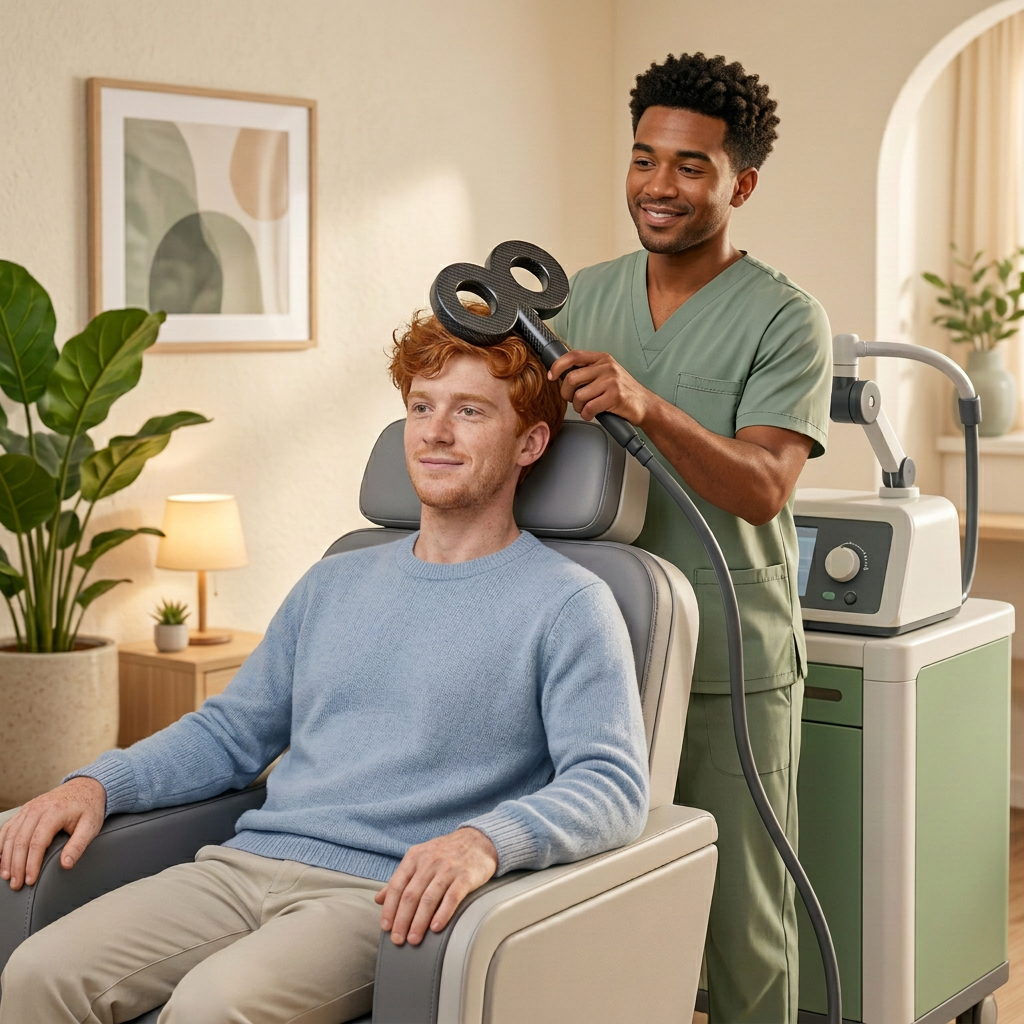
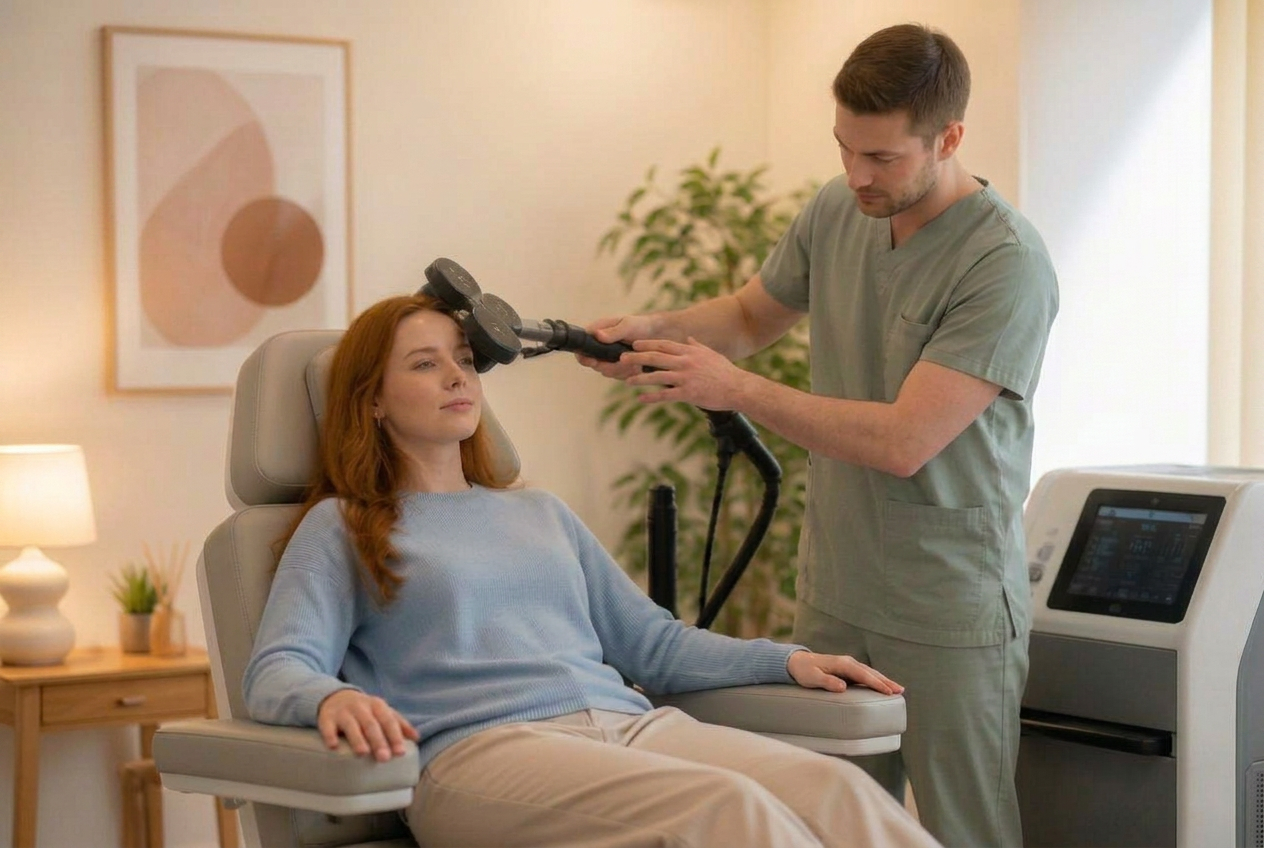
TMS is a non-medication treatment for depression that hasn't responded to antidepressants. A gentle magnetic coil delivers pulses to areas of the brain involved in mood.
- No surgery
- No anesthesia
- You stay awake during treatment
- Usually covered by insurance plans (when applicable)
Who is TMS for?
TMS may be an option if…
- •You've tried antidepressants without enough benefit (at least two from separate classes).
- •Antidepressants caused side effects you couldn't tolerate.
TMS may not be appropriate if you have…
- •Certain metal implants in or around the head
- •Some implanted medical devices
- •Certain neurological conditions
Your treatment team will review whether TMS is safe for you.
How does TMS work?
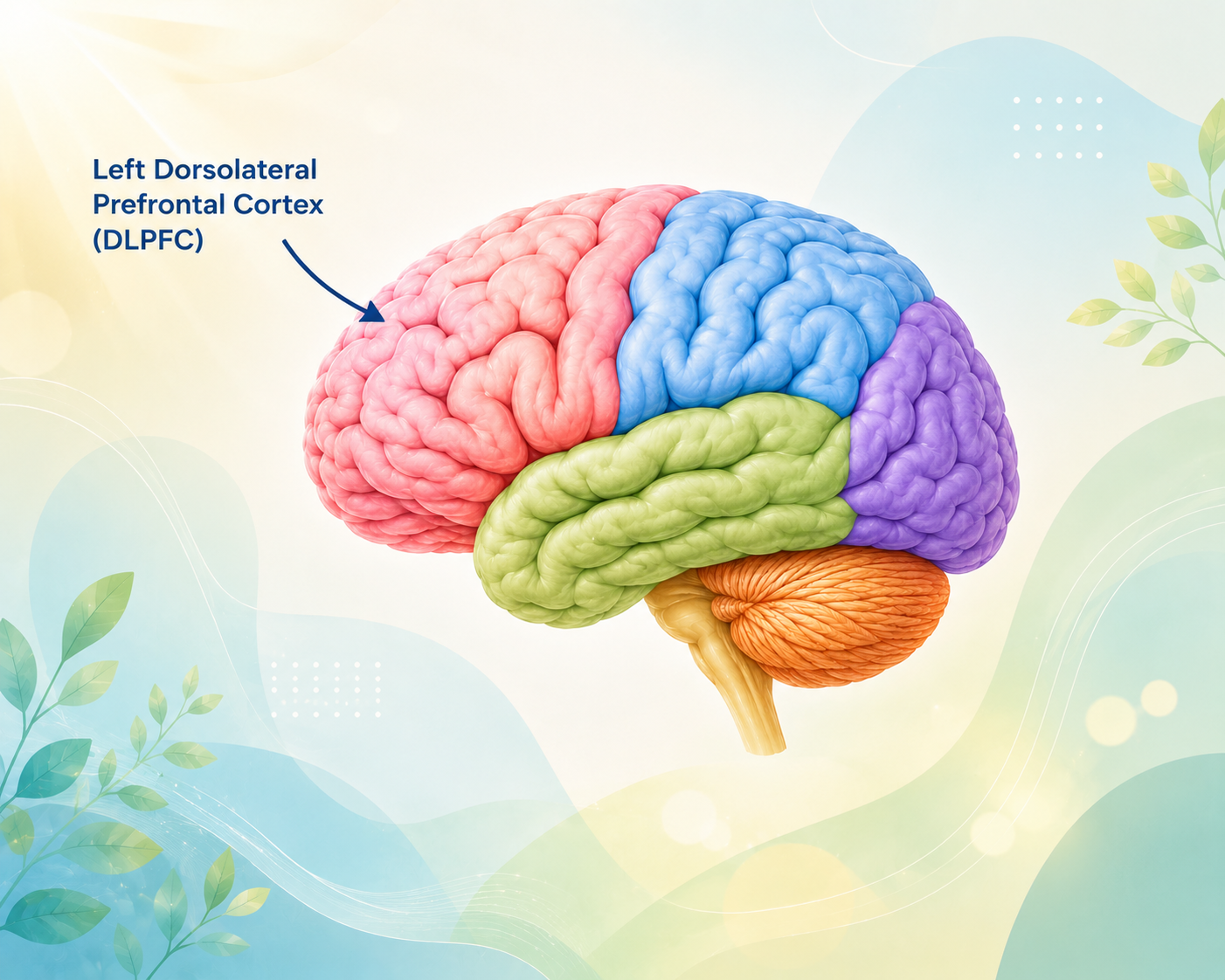
Researchers believe TMS helps restore communication within brain networks involved in mood regulation.
What happens during treatment?
Before treatment: "Mapping"
Your first appointment includes mapping, where your provider finds your motor threshold — the minimum stimulation needed to produce a small movement in your hand. This personalizes your treatment intensity.
Treatment schedule
- Some people notice little change at first.
- Mild scalp discomfort or headaches are most common in early sessions and often improve.
- Some experience a temporary worsening — sometimes called "the dip" — with sadness, irritability, or fatigue.
- Not everyone experiences this, and it usually passes.
- Many people notice more consistent improvements:
- Improved mood · more energy · clearer thinking · fewer negative thoughts · greater enjoyment of daily life.
Unlike medications, TMS acts directly on brain circuits involved in depression and doesn't circulate throughout the body. This is one reason it generally doesn't cause side effects like weight gain, sexual dysfunction, or nausea that some antidepressants can.
What does treatment feel like?
Most people describe it as a "woodpecker tap" — a gentle tapping on the left side of the head.
The first few sessions may feel unusual or mildly uncomfortable, but many people get used to it after several treatments.
Common side effects
- Scalp discomfort
- Mild headache
- Facial muscle twitching during stimulation
Rare
Seizure (very rare).
How effective is TMS?
Frequently asked questions
Myths vs. facts
"TMS is electroshock therapy."
TMS is different from ECT. It uses magnetic pulses and does not require anesthesia or induce a seizure.
"I'll lose my memory."
Memory loss has not been shown to occur with standard TMS.
"It changes my personality."
The goal is to reduce symptoms of depression — not change who you are.
"Magnets damage the brain."
TMS has been studied and is considered safe when delivered according to established protocols.
What happens after treatment?
- 1Treatment ends
- 2Continue feeling well
- 3Routine follow-up
- 4Symptoms return?
- 5Possible maintenance treatment